Students who are constructing an IGCSE art and design portfolio are usually not able to choose the correct medium for their coursework and eventual presentation. The medium used contributes significantly to creativity, experimentation, technical quality, and general visual impression.
Examiners are not just seeking drawing abilities but also exploration, originality, and confidence in using materials. Learning about the various media for the final IGCSE art can assist students in finding out which media best fit their artistic abilities. This guide compares the most popular art mediums and their most effective areas of use and assists students in coming up with more cohesive and well-rounded portfolio development work.
Learn how to create an outstanding IGCSE Art portfolio with expert mentorship.
A] Understanding IGCSE Art Portfolio Requirements
The IGCSE art portfolio is evaluated based on creativity, experimentation, observation, technical control, and development of ideas. Students will demonstrate an exploration process instead of just displaying completed artwork. Assessment includes sketchbook studies, testing materials, planning compositions, and personal responses.
Good portfolios tend to have a mix of works that reflect artistic development as well as mastery of various techniques and materials. Cambridge IGCSE Art and Design (0400) coaching can also be considered by students who want to use the help of a professional coach to develop their creative and technical abilities in order to prepare a portfolio.
B] The Importance of Selecting the Appropriate Medium
The texture, mood, originality, and quality of presentation of any piece of art all depend on the medium to be used. Some media produce subtle and tender effects, whereas others are dramatic and bold. The selection of the right material also enables the students to express their ideas better.
Experimentation also reflects well in the use of various best art media in IGCSE portfolios, which is well appreciated during assessment. A collection of different textures and methods seems to be more innovative and appealing to the eyes than one that utilizes the same medium all the way.
Students appearing for tests can go through ICSE art paper 1 to reinforce drawing, presentation, and composition planning skills.
C] Pencil & Graphite: Ideal for Observation Research
Graphite has remained as one of the most trusted and popular mediums in IGCSE portfolios. It is particularly useful in:
- Realistic drawing
- Tonal studies
- Anatomy practice
- Still life compositions
Graphite pencils enable students to concentrate on observation, proportions, and accuracy of shading. They are ideal for detailed object studies, portrait work, and texture rendering. Most of the successful examples of the IGCSE art examples start with graphite drawings, since they are clear in terms of technical knowledge and observation.
Graphite is also rated as one of the best art media for beginners since it can be easily controlled and can be used to practise tonal depth.
D] Watercolours: Best to be Used to Layer and Experiment With Colours
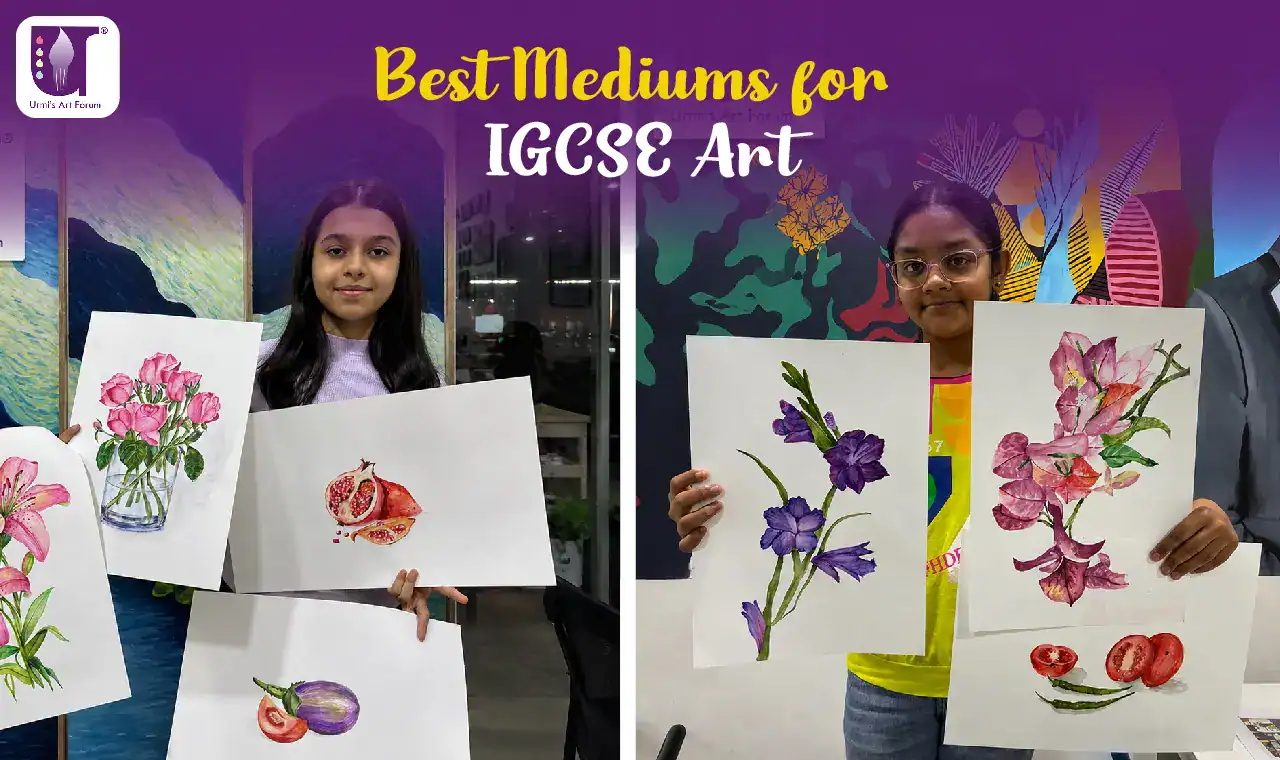
Watercolours are extremely popular among students who like gentle layering and colour transitions. The clarity of watercolour enables the artists to make delicate washes, gradients, and atmospheric effects.
Watercolours are effective with:
- Landscape studies
- Nature illustrations
- Fashion sketches
- Background compositions
Art classes in Mumbai can also be explored by students who are interested in enhancing their techniques in experimental paintings and creative presentations of their work.
E] Acrylic Paints: Ideal for Bright and Lively Work
IGCSE portfolios have been using acrylic paints due to their quick-drying nature and good color application. They are very versatile and may be applied to both smooth and textured painting methods.
Acrylics are regarded as one of the best art media for painting due to their ability to work on paper, canvas, wood, and mixed surfaces. Acrylic paints are frequently utilised by students to create expressive portraits, abstract art, and bold final compositions. They are also able to layer readily, enabling students to experiment more freely without ruining previous layers of paint.
F] Charcoal and Soft Pastels to Create Dramatic Effects
Charcoal is great for producing a solid tonal contrast and expressive studies. It assists students to produce deep shadows, rich textures, and dramatic compositions in a short period of time. Charcoal is particularly effective in drawing figures, portraits, and large-scale observation.
Soft pastels can be used to blend and render texture. Their easy use produces lively and painting surfaces. To achieve the effects of layers and a more dynamic visual presentation, students tend to mix soft pastels with charcoal or pencil.
G] Mixed Media: Portfolio Approach With High Score
One of the best methods of showing experimentation and creative thinking in an IGCSE portfolio is mixed media. The fusion of various materials demonstrates self-confidence, innovativeness, and experimentation.
Popular mixed media combinations are:
- Ink + watercolour
- Collage + acrylic
- Pencil + digital enhancement
- Charcoal + pastel layering
The mixed media work tends to be more visually stimulating due to the combination of textures, transparency, and contrasting surfaces. Experimentation with various materials and processes also helps students to form more personal styles in their art.
Online trends are one of the mistakes that many students commit without knowing how to do it correctly. Students should be taught about some of the common mistakes in art so that they can avoid poor experimentation and enhance their portfolio quality in a more efficient way.
H] Best Media According to Career Interests
Various media tend to favour diverse career objectives of creativity. Selecting appropriate materials can assist students in developing more targeted portfolios.
Recommended medium choices:
- Fashion design → watercolour & markers
- Animation → digital art
- Fine arts → acrylic & charcoal
- Product design → technical sketching
- Illustration → ink & watercolour
- Interior design → markers & perspective drawing
I] Top 10 Medium Selection Pitfalls
By making unnecessary medium-selection errors, students tend to decrease the quality of their portfolios.
Common mistakes include:
- Excessive use of a single medium
- Weak experimentation
- Poor finishing quality
- Imitating without knowing how
- Working on hard mediums without practicing
- Ignoring presentation consistency
Balanced experimentation tends to produce more impressive and high-scoring work in a portfolio.
Get personalised feedback on your portfolio, medium selection, and composition techniques.
Conclusion: IB vs. A-Level Art in Design Careers
The best portfolio submissions in the IGCSE art and design portfolio are those that exhibit technical competence and exploration of creativity. Trying new materials will assist students in finding their own strengths and creating more appealing portfolios. With graphite, watercolour, acrylic, charcoal, or mixed media, students are to concentrate on originality, consistency, and confident presentation. Trying various media for the final IGCSE art and still having a clear artistic direction can greatly enhance the quality of portfolios and creative development in the long run.

Komal Ullal
Ms. Komal Ullal, a recipient of the prestigious President’s Award and Co-founder of UAF, is an expert in student profiling, enhancing artistic skills, mentoring in design thinking and an inspiring women entrepreneur. With an impressive collection of 577 awards—including 196 trophies and 109 medals—earned in drawing and painting at both national and international levels, she was featured in the Limca Book of Records in 2007 as the youngest achiever of such accolades. Her passion and dedication continue to inspire budding artists and designers worldwide.