
Industrial product design is a profession that borders on creativity, engineering, and problem-solving. An industrial product designer has his or her hand on everything that we use in everyday life, such as smartphones and furniture, medical equipment, and kitchen appliances.
The curiosity about this field has been on the rise as industries are changing and users are demanding more.
This guide will take you through the profession, the process of entering into it, the career prospects in India and the chances of success without a degree.
Explore Industrial & Product Design Courses
A] What Is Industrial Design?
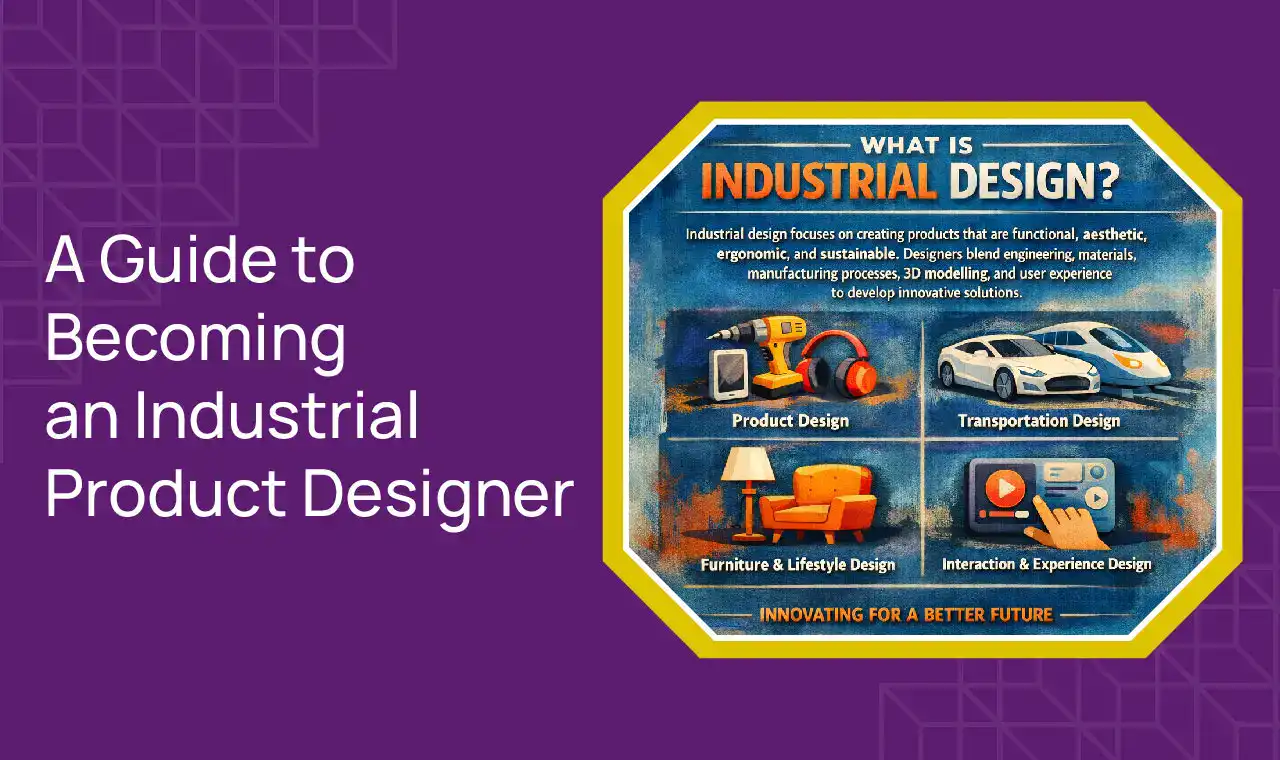
It is a field that deals with functionality, aesthetics, ergonomics, and production of products. Industrial designers do not just think about the appearance; they think about the usage of the product, its production, the material that will be best to use, and how it will fit with natural human behaviour.
An industrial product designer is an engineer who incorporates engineering concepts, knowledge of materials, manufacturing processes, 3D modelling and user-centred thinking to design products of meaning. If you are wondering what the four fields of industrial design are, they include:
- Product Design – daily consumer goods.
- Transportation Design – mobility and vehicles.
- Furniture Design Lifestyle Magazine – interiors, furniture, decoration.
- Interaction & Experience Design – physical products that have digital interfaces.
A learner who is experimenting with the basics may begin with formal education by enrolling in industrial design classes in Vile Parle, which provide a combination of creative and technical foundations.
B] What Qualifications Do You Need to Be an Industrial Designer?
The good news is that students from science, arts, or commerce backgrounds can enter this field after Class 12.
Typical educational routes include:
- Undergraduate degrees such as B.Des, Bachelor of Industrial/Product Design, or in some institutes, B.Tech in Industrial Design
- Entrance exams like NID DAT, UCEED, CEED, and institute-specific tests
Beyond formal education, strong designers develop:
- Soft skills: creativity, problem-solving, sketching, design thinking
- Technical skills: CAD software (SolidWorks, Rhino), prototyping, rendering, materials knowledge
Many students also explore alternative paths. Can I become an industrial designer without a degree? Yes, through diplomas, certifications, strong portfolios, and industry experience. Still, studying at recognised design institutes in Mumbai often provides better exposure, mentorship, and placement opportunities.
C] How to Become an Industrial Designer After 12th?
If you’re wondering how to become an industrial designer after 12th, the path is structured but flexible.
A practical step-by-step approach includes:
- Choose any stream in Class 12 and build creative and analytical thinking
- Prepare for entrance exams such as NID, UCEED, or CEED
- Enrol in an industrial or product design programme (degree or diploma)
- Build a strong portfolio that shows problem-solving, not just aesthetics
- Take internships during college to gain real-world exposure
- Participate in design competitions, workshops, and exhibitions
- Continuously improve CAD skills, prototyping, and design research
Students who want to explore early often start with art and design courses in Mumbai, which help build fundamentals before committing to a specialised programme.
D] Is It Hard to Get a Job in Industrial Design?
A common concern is “is it hard to get a job in industrial design?” Like any creative field, competition exists, but opportunities are growing steadily. Employers look less at marks and more at your portfolio, thinking process, and ability to solve real problems.
Key factors that improve employability include:
- A strong, well-documented portfolio
- Hands-on experience with industry tools
- Internship experience and networking
- Clear design thinking and user empathy
Industries such as consumer goods, electronics, transportation, furniture, and startups actively hire designers. As for whether industrial design will be replaced by AI, the reality is that AI may assist with rendering or concept generation, but human intuition, empathy, and user-centred innovation remain irreplaceable, making designers more valuable, not obsolete.
E] Salary of Industrial Designers in India
Another frequent question is what the salary of an industrial designer in India. Salaries vary based on experience, skills, industry, and location.
Typical salary ranges include:
- Freshers: ₹3.5–6 LPA
- Mid-level designers: ₹7–12 LPA
- Senior designers: ₹15–25 LPA+
- Freelancers: Project-based earnings vary widely
Higher salaries are often seen in automotive design, consumer electronics, tech-driven startups, and international design studios. Factors such as CAD proficiency, portfolio quality, and industry exposure significantly influence earning potential.
F] Career Scope & Opportunities in Industrial Design
The career scope in industrial design is broad and evolving. Designers today work across physical and digital spaces, often collaborating with engineers, marketers, and researchers.
Common roles include:
- Industrial / Product Designer
- CAD & 3D Modelling Specialist
- Design Researcher
- UX + Physical Product Hybrid Designer
- Furniture & Lifestyle Designer
- CMF (Colour, Material, Finish) Designer
- Prototype & Model Maker
Industries span automotive, appliances, furniture, medical devices, packaging, electronics, and innovation labs. Emerging trends include sustainable design, smart products, IoT-based solutions, and human-centred innovation. Students exploring advanced learning can learn more through industrial and product design courses that focus on future-ready skills.
G] Can You Become an Industrial Designer Without a Degree?
Can I become an industrial designer without a degree? Yes, and it can especially be with good self-discipline and portfolio development. Most designers come into the field by:
- Short-term certificates and diplomas.
- Learning CAD, drawing, and sketching independently.
- Freelance work and internship.
Nevertheless, a formal degree can be a gateway to formal education, industry exposure, and placements with studios and multinational corporations. Before making their choice, many potential designers balance between flexibility and structure by investigating the options of learning through recognised design courses in Mumbai and then make their choice.
Explore Industrial & Product Design Courses
Conclusion
Product design in industry is a career of tomorrow that integrates creativity, technology and humanistic thinking. Students who are keen on developing meaningful products have numerous opportunities in the field in different industries. Skill-building, good portfolios, and working experience are key to success regardless of the degree, diploma, or other course of learning. Along with the ever-increasing need for innovation and sustainable solutions, competent industrial designers will succeed, and AI will not be a substitute.

Komal Ullal
Ms. Komal Ullal, a recipient of the prestigious President’s Award and Co-founder of UAF, is an expert in student profiling, enhancing artistic skills, mentoring in design thinking and an inspiring women entrepreneur. With an impressive collection of 577 awards—including 196 trophies and 109 medals—earned in drawing and painting at both national and international levels, she was featured in the Limca Book of Records in 2007 as the youngest achiever of such accolades. Her passion and dedication continue to inspire budding artists and designers worldwide.