
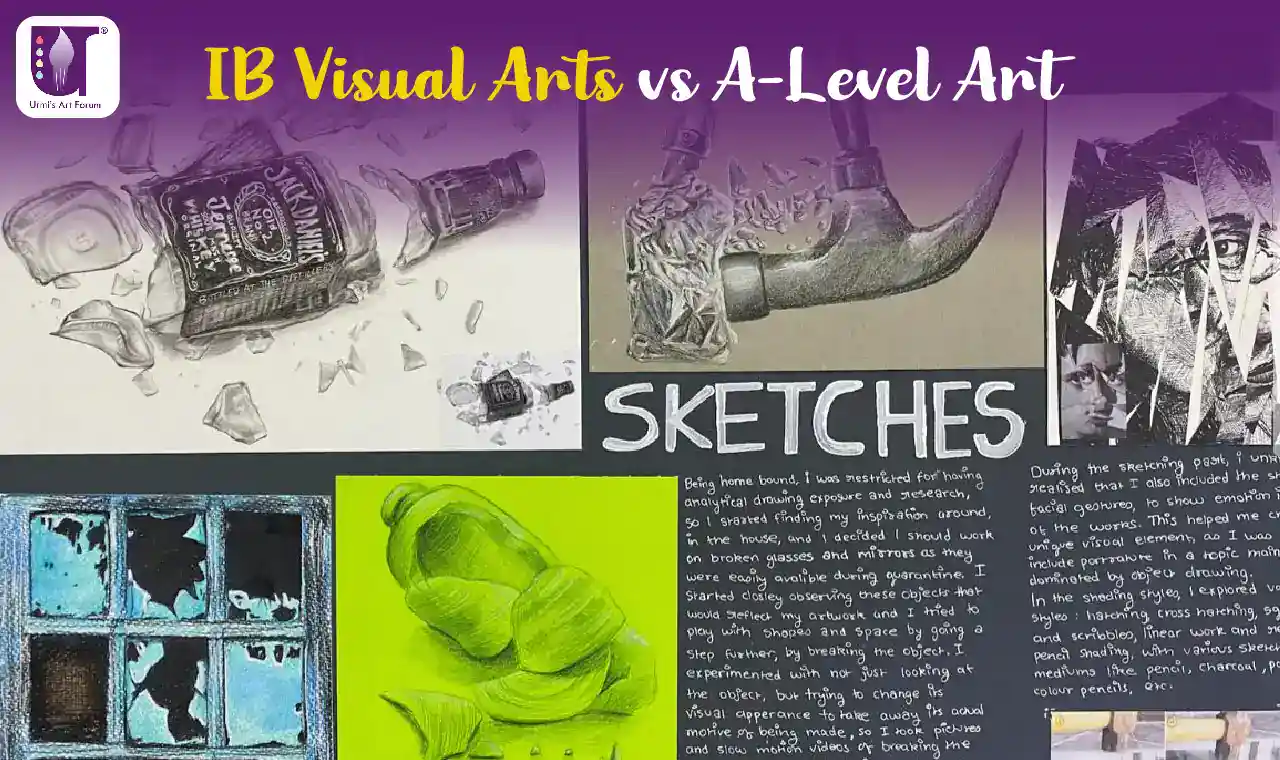
Students who want to pursue a creative career may face difficulties in choosing between IB and A-level art. The two qualifications are globally recognised and assist students in creating portfolios for university applications in areas such as graphic design, animation, fashion, architecture, and fine arts.
The primary distinction is in the learning style. IB is more research-oriented, experimental, and reflective, whereas A Levels are more technical and specialised. These differences can help you decide on the right career in the field of design in the future.
Get expert guidance to choose the right art curriculum for your future design career.
A] What is IBDP Visual Arts?
The IBDP visual arts course is included in the International Baccalaureate Diploma Programme and is an integration of practical art-making with research, reflection, and conceptual thinking.
Students explore various media such as painting, photography, sculpture, digital art, and mixed media. The course stimulates students to learn about other cultures and their artists and form their own creative concepts.
An IB art and design course lays a lot of emphasis on process, experimentation, and artistic development rather than just final results. The students are evaluated using such elements as the process portfolio, comparative study, and exhibition.
To enhance their creative and technical abilities, students who seek professional advice and portfolio development can consider IB Visual Arts coaching in Mumbai.
B] What is A-Level Art and Design?
The A-level art and design qualification is more specialised and studio-based. It enables students to build technical expertise and to delve into a selected field of art.
Students may major in:
- Fine Art
- Graphic Communication
- Fashion Design
- Photography
- Textile Design
- Illustration
The course is aimed at fieldwork, experimentation with the material, and producing refined final work. A Levels have less academic writing as compared to IB and more technical execution.
Structured courses such as Cambridge A-Level Art and Design (9479) are usually helpful to students who are planning to create university portfolios.
C] The Main Differences Between IB Art and A-Level Art
| Feature | IB Visual Arts | A Level Art and Design |
| Learning Style | Research-based and interdisciplinary | Practical and studio-focused |
| Main Focus | Creativity and experimentation | Technical ability and specialisation |
| Assessment | Process Portfolio, Comparative Study, Exhibition | Externally set assignment and coursework |
| Writing Component | Considerable contemplation and thought | Limited written work |
| Media Exploration | Wide experimentation in media | Extensive specialisation |
| Best Suited For | Learners who are conceptual and analytical | Hands-on visual learners |
| University Preparation | Powerful research-based design programs | Well-established studio art programs |
D] IB Visual Arts Process Portfolio Criteria Explained
What is a Process Portfolio?
One of the most significant assessment elements in IB Visual Arts is the Process Portfolio. It records the artistic process of a student and shows how ideas can develop by experimentation, research, and reflection.
The portfolio includes:
- Drawing and idea creation
- Artist research
- Media experimentation
- Technical studies
- Reflections and annotations
Instead of analysing the completed art piece, IB considers the whole creative process.
IB Visual Arts Process Portfolio Criteria
The IB visual arts process portfolio criteria evaluates students in four key areas:
1. Skills, Techniques, and Processes
Students show confidence in the application of various materials, tools, and artistic techniques.
2. Critical Investigation
Students critique artists, cultural influences, and contextual references related to their own work.
3. Communication of Ideas
Creative ideas and artistic intentions should be evident in the portfolio.
4. Reflection and Refinement
The course demonstrates experimentation, improvement, and critical reflection in students.
E] Why It is Important to Design Careers
The IB approach is creating skills that are essential in the current creative industries. Design professions usually involve research, ideation, experimentation, and problem-solving to arrive at a final result.
IB visual arts is especially helpful to students who are interested in:
- UX/UI Design
- Architecture
- Product Design
- Advertising
- Creative Direction
- Contemporary Art Practice
F] A Level Art Coursework & Portfolio Structure
What is A-Level Art Coursework?
A-level art coursework constitutes a significant component of the final assessment and enables students to develop a body of creative work over time.
Coursework usually includes:
- Observational drawing
- Artist studies
- Material experimentation
- Composition development
- Outcomes
The structure of coursework is used to build the technical confidence and personal artistic style of the students.
A Level Art and Design Portfolio Breakdown
The A-level art and design portfolio usually comprises two major sections:
Personal Investigation
Students research a selected theme on their own and create practical work with the help of research and written analysis.
Externally Set Assignment
Students answer an exam board brief and do a final practical examination.
Professional art and design classes where the emphasis is put on creative mentoring and portfolio development can help students further enhance the quality of their portfolios.
G] Assessment Criteria Explained
In A-Level art assessment is based on:
- Developing creative ideas
- Experimenting with techniques and materials
- Recording observations effectively
- Giving a personal and significant final response
A Levels are more focused on technical performance and the quality of presentation than IB.
H] Which Major is Superior in Design Careers?
IB would be more applicable to students pursuing conceptual and research-oriented careers, whereas A Levels would be more appropriate to students pursuing technical and studio-based careers.
With a good portfolio, both qualifications can result in admission to the best design universities.
I] Which is Better for Art Beginners?
Beginners might find A Levels easier due to their practical orientation. IB can be appropriate for those students who like writing, researching, and experimenting as well as art-making.
J] Which of the Courses is More Recognised Worldwide?
IB and A-levels are both internationally accepted by top universities. The admissions departments tend to focus on the creativity, originality, and quality of the portfolio rather than the qualifications themselves.
Build a strong portfolio for top design entrance exams and global art universities.
Conclusion: IB vs. A-Level Art in Design Careers
There is no universally “better” choice between IB Visual Arts and A-Level Art and Design. The right course is based on your learning and career objectives.
IB Visual Arts is a good option when you like research, experimentation, and conceptual thinking. It is appropriate for students who are interested in creative problem-solving and interdisciplinary design areas.
Select A Level Art and Design if you want to practise in a studio, develop technical skills, and focus on one particular art form.
Both qualifications are recognised worldwide and have the potential to assist students to develop good portfolios in the best art and design universities.

Komal Ullal
Ms. Komal Ullal, a recipient of the prestigious President’s Award and Co-founder of UAF, is an expert in student profiling, enhancing artistic skills, mentoring in design thinking and an inspiring women entrepreneur. With an impressive collection of 577 awards—including 196 trophies and 109 medals—earned in drawing and painting at both national and international levels, she was featured in the Limca Book of Records in 2007 as the youngest achiever of such accolades. Her passion and dedication continue to inspire budding artists and designers worldwide.